HOLLYWOOD’S BLIND SIDE

I finally broke down and watched a movie that several of my daughters were raving about. “The Vow,” starring Rachel McAdams and Channing Tatum, chronicles a young couple’s tumultuous recovery from a car accident that nearly killed both of them. Paige suffered a brain injury that left a five-year hole in her memory, including the romance and marriage to her husband, Leo.

Paige tries to live with her husband, who is now a stranger, but she instinctively wants to return to the life she remembers. She decides to reconstruct her life from the familiar, even divorcing Leo, who has patiently and tenaciously held on to his love for his wife and hope for her recovery. Strangely, she begins making the same decisions she had made years earlier until she ends up back in the same place she was in when she first met Leo. The movie ends with Paige reconnecting with Leo and the possibility of a new relationship.

The movie takes liberties with the real-life story upon which it is based. Kim and Krickitt Carpenter met in 1992. Their year-long courtship culminated in a wedding. Ten weeks later a car accident left Krickitt with a memory loss of the last 18 months of her life, including Kim.

Kim and Krickitt Carpenter with their two children, Danny and LeeAnn

But the real couple did not divorce. Kim and Krickitt possess a deep faith in Jesus and Kim says,

“I made a vow before God and that, to me, was a promise to keep.”

Eventually a social worker suggested that they begin dating again, to restart their relationship. They had a second wedding ceremony so that Paige would have a memory to celebrate. Twenty years later, they are happily married with two children.

While the movie draws attention to Leo’s faithful love for Paige, in spite of frustration and rejection, it does not suggest that he was compelled by his vow to her. In fact, their wedding took place in Chicago’s Art Institute with a few friends, one of whom acted as a legal official to pronounce them married. Leo’s narration throughout the story emphasizes fate and the effect of the impacts in life. The title has little to do with the movie, but everything to do with the real story. Maybe the movie should be titled “The Impact” to coincide with Leo’s worldview.

Hollywood has great difficulty packaging and marketing the Christian faith. I suppose that a wife remaining faithful to her wedding vow, even when her brain and emotions cannot corroborate that vow, seems unrealistic in a culture of relational roulette. Never mind that this is the real-life story, not the fictional revision on the screen.

Audiences can sympathize with Leo’s faithful love better than they can identify with Krickitt’s faithfulness to a vow.

Why would someone keep a vow to someone for whom they have no emotional connection? Most couples today would agree that when the emotions are gone, the marriage is dead and prolonging it is torture.

The Carpenters’ story does not lack the human emotional component. It transcends it. Kim admits that Tatum accurately portrayed his intense frustrations in the early months of Krickitt’s recovery. He even confesses to a period of bitterness towards God that tested his faith and love. It was his faith in Christ that sustained him. It was Krickitt’s faith in Christ that enabled her to live as a married woman to a man she did not know in honor of her vow. Their faith provided the framework for them to discover a new love for one another as they had to reboot their life together.

Hollywood also fumbled the Christian message in the movie, “The Blind Side,” the story of a Memphis family, the Touhys, who adopted a homeless black teenager, Michael Oher. Oher went on to become an All American lineman for Ole Miss and a first round draft pick of the Baltimore Ravens.
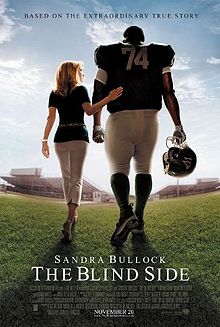
Set in a city where racial boundaries are still visible, a white family ignored the looks and defied the warnings when they determined to extend the blessings God had given to them to a traumatized young man. They explain that they do not view their act as extraordinary, because it was part of the flow of their lives already. God had given both of them a compassion for those in need and an ability to help others, which they did routinely.

Although Hollywood did not truncate the Touhys’ faith, the movie minimized it. The Touhys live out their faith in Jesus every day in ways they consider ordinary. Leigh Ann Touhy said in an interview, “That’s been one of our common passions, is that we feel like we should share what we have with other people. I think that we would have shared with anyone. Michael was the not the first person; he was just the first one whose story got told.”

Ironically, Hollywood still loves a story of redemption. It still gravitates to the plot where a damaged person experiences healing and renewal, usually through a greater love that makes personal sacrifices for the loved one. The supreme story of redemption resides in the Christian story. Hollywood seems content to live within the shadows of that story rather than the real-life story itself.

Posted in Character, Integrity, Marriage, Movies | Tagged , , , , | Leave a comment

BEING FOR MORE THAN BEING AGAINST

Congress shall make no law respecting an establishment of religion, or prohibiting the free exercise thereof; or abridging the freedom of speech, or of the press; or the right of the people peaceably to assemble, and to petition the Government for a redress of grievances. First Amendment to the United States Constitution

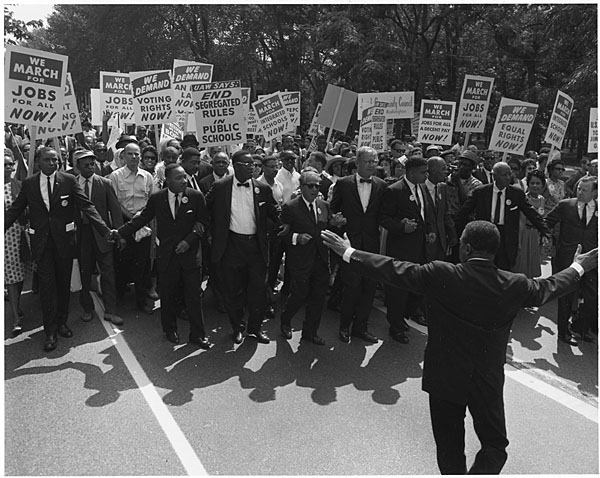
Civil Rights marches like this one in 1963 gave strict adherence to the intent of the First Amendment right to peacefully protest.

The founders of our country believed that any form of human government should be subject to critique, correction and even dissolution when it no longer protects, but violates, certain basic human rights, including life and liberty. They had no illusions that the republic they were establishing in the American colonies would evolve into some level of perfection. They had a clear sense of the corruptibility of human nature, especially when it came to the exercise of power.

The right of peaceable assembly has undergirded our nation since its birth. This phrase implies a protected right to protest. When the government begins to trample on personal liberties, its citizens need some way to express their disapproval. One expression has been public corporate protests. Americans have valued this right and exercised it for decades.

The Constitution protects only peaceful protests. National security, public safety and individual freedoms provide the boundaries of public protest. A protest cannot infringe upon the rights of other citizens, such as causing property damage or depriving people of their livelihoods.

The NATO protest in Chicago on Sunday, May 20, had isolated incidents of violence.

Protests at the NATO Summit meetings in Chicago this weekend followed strict guidelines and maintained the integrity of the first amendment’s intent, until Sunday. A small group of radical protestors decided to violate the conditions of the protest and refused to disassemble at the agreed time. They also insisted on moving closer to the entrance of the Summit meetings.

This small contingent began pushing against the wall of police officers in riot gear, throwing bottles and swinging sticks at the officers. They transgressed the “peaceable” condition and posed a threat to national security, requiring the officers to use force to resist them. Some protestors were injured after being clubbed by officers and some were arrested.

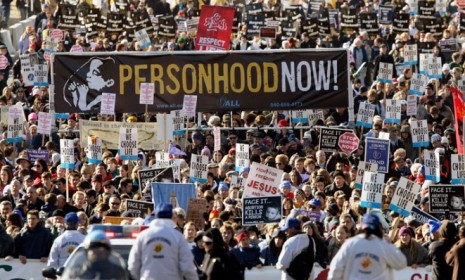
Anti-abortion protest in Washington D.C.

As I watched the encounter, I wondered about the role of believers in this practice. I have participated in several public protests against abortion. On one occasion, a few radicals corrupted the peaceful nature of the assembly by shouting malicious and hateful speech. Although it did not introduce physical violence, I believe it compromised the responsibility of every Christ follower to practice kindness, gentleness and restraint.

Christ followers hold a dual citizenship. We are citizens of at least one earthly nation, but we are also citizens of the kingdom of God. Since God outranks any earthly authority, we must live by the principles and precepts of his kingdom first. Whatever we do must present an accurate picture of the nature of the heavenly kingdom to a watching world.

Protests against the Veitnam War like this one in Washington D.C. sprang up during the late ’60’s.

Jesus provided the perfect model of a kingdom citizen operating within earthly power structures, both political and cultural. The rule of love and compassion led him to ignore some cultural traditions (considered law by their practitioners). When the status quo protectors confronted him, he responded with carefully reasoned arguments. When political authorities became abusive, he restrained himself from any response, choosing to accept their acts of injustice without retaliation.

Paul and other apostles became the targets of official opposition to the kingdom message. Some enjoyed the smell of a prison cell on more than one occasion and some experienced more violent forms of punishment by power holders. Paul did not hesitate to use the laws of the earthly kingdom to protect himself from unjust treatment, while maintaining the spirit of the heavenly kingdom in all of his actions.

Occupy Wall Street protesters near Wall Street, October 3, 2011

The value of public protest can be debated, but many people believe it provides a megaphone for their voice in criticism of the government or other authority structures in society. Arguably, the more voices that gather collectively, the more weight the protest has and the more likely the authority will listen. As long as citizens have some leverage over authorities, such as voting or spending power, and protests are protected, they can have some degree of effect.

If public protests serve the interests of the kingdom of heaven, then its citizens should utilize them. God has given us a mission to extend his reign throughout the world, a reign that transcends all earthly rulers. Christ has commissioned us as his ambassadors to promote the message of peace, love and reconciliation for which he gave his life in an individual public protest.

It seems important to remember that the voice of the kingdom citizen always speaks in favor of the heavenly kingdom, even when speaking in disfavor of an earthly kingdom. We are always for more than we are against.

Posted in Kingdom of God, Politics and Christianity | Tagged , , | 1 Comment

THE MALNOURISHED COMMUNITY

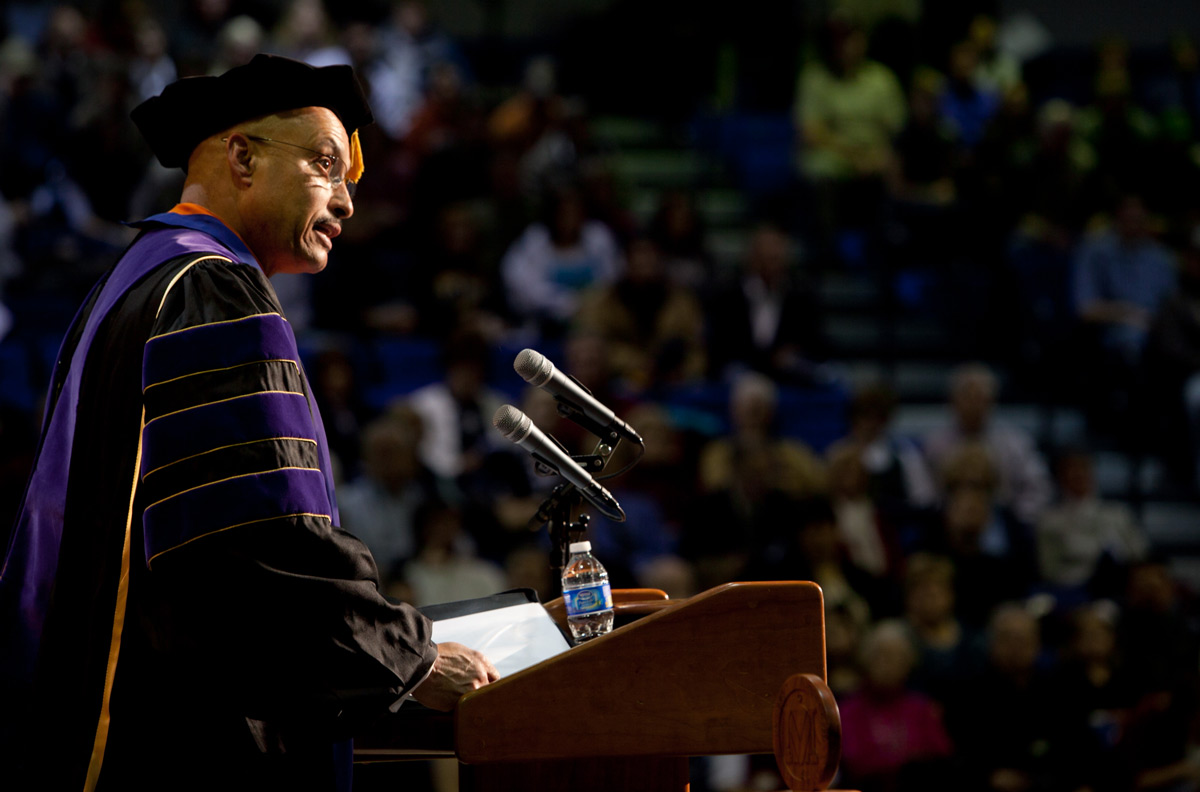
The Chancellor speaking at the 2012 UW Platteville commencement

My wife and I recently made a trip to Wisconsin to watch our daughter graduate from college. The college decided this year to divide the class into three groups with separate ceremonies at different times of the day. My daughter drew the morning ceremony.

This abbreviated the commencement considerably. We enjoyed two speakers, a student speaker and an alumnus. Both speakers were engaging and they shared some insights valuable to the graduates – if they were listening.

Following the speakers, the Chancellor spoke briefly. He, too, imparted some words of wisdom to inspire these aspiring new degree holders. Although he spoke only 3 minutes and 33 seconds, something grabbed my attention.

“As Pioneers [school mascot], you have the knowledge, skills and expertise you need to excel in whatever endeavor you pursue, to blaze your own path in life. Have confidence that most of what you need already lies within you, your knowledge, your hard work ethic, your dedication, your desire to make a difference in the world. If there are things you do not know, seek out the answers. In times of struggles, find inner strength to forge ahead. And if you need to, ask for help.”

This exhortation would normally not have sounded any DEFCOM alerts, but in recent years, I have noticed that one of my values is grossly overweight. I take some blame for its obesity, because I have adjusted my diet in its favor. But American culture bears a large portion of blame for stuffing this value with empty carbohydrates.

The Chancellor’s words sound very familiar. The condensed version goes like this: “You are more than adequate, having everything you need to achieve your own success. What you don’t have, you are capable of getting for yourself. The power is within you. But if, by some chance, you get into trouble and maybe, perhaps, by an unusual set of events, you cannot get yourself out of that jam, then, and only then, is it acceptable to ask for help.”

When are we going to figure out that this message grossly slants the odds for success toward the individual? Now, success is built on many qualities and skills that the individual must bring to the table, such as responsibility, initiative, reliability, integrity and others. But who of us would ever claim sole ownership of any achievement we have obtained?

I have never heard an Academy Award winner step to the microphone and say, “I am not going to acknowledge anyone for helping me, because I achieved this all on my own effort.”

The value of individualism dominates American society. It is like the elephant that fills the room so that all other animals must remain outside or risk being crushed by its unruly weight. We all know that interdependence and community are also values, but they are fed the leftovers from the unhealthy meal of individualism – “only when you really, really, really need help.”

Really? I don’t know about you, but I always need help. I was not created to be alone. The Creator did not declare the creation very good until he created a companion for the man. I am an interdependent being, not an independent, self-sufficient solo act. I am designed to contribute to the success of others while they contribute to mine. I have many inadequacies for which others will compensate, if I acknowledge my needs and allow myself to depend on others.

People talk about community, but many of us are deficient in understanding what this value really looks or feels like. If I am honest, I think it mostly describes a social need. We practice community when we get together socially. Nearly everyone recognizes the need for relationship. Even the introvert, who carefully protects her alone time, seeks social connections.

Barn raising illustrates the power of community.

But community runs much deeper and richer than mere social interaction. Community refers to the dependency needs of each person and the complex network of people who meet that array of needs. Each person in that network also relies on the gifts and strengths of a community of people to compensate for his and her deficiencies. The interconnections are exponential.

This precedes the point that most people identify as “really needing help.” Needing help implies injury, calamity, crisis, desperation. These are the times when we look for community. And when we experience interdependence in those times, we discover a vibrant beauty to relationship that brings a new sense of joy and satisfaction. This fullness of life can be enjoyed at all times when community is practiced.

Community, one of those animals outside the room occupied by the elephant, will become a habit only when we learn to quit feeding the elephant. We need to quit listening to the mantra of the culture. We need to acknowledge our needs and deficiencies without shame. We need to find people who provide what we cannot provide for ourselves. We need to find people who have needs that we can meet in them. We must reapportion our value system and admit that we always have and always will need help.

The individual must shrink if the community is to grow.

Posted in Community, Individualism | Tagged , , , | Leave a comment

DESTINATION HEAVEN?

heaven 1Every good story, either in book or movie form, incorporates a rescue. Good stories recognize the human conflict – with evil, with nature or even with one’s self. Most storytellers, except for the most pessimistic, want to convey a sense of hope and thereby introduce some means of rescue from the conflict. And most readers, except for the most pessimistic, want a happy ending at the conclusion of the story.

The Christian story is no different. People expect a happy ending. If there is a God in heaven, then surely he must be capable of rescuing his creatures from the evil that humans have failed to restrain for millennia.

A recent Gallup poll reveals that 85% of Americans believe in heaven. (This statistic defies the surge of secularism in every American institution.) As they understand the story, God rescues people from a world infected by evil and subordinate to an evil spirit. That rescue occurs at death, when the soul is released from its bondage to the body and transferred to a new residence absent of all evil.

It’s a great rescue story, but anyone familiar with the details of the Christian narrative might find it deficient. For example, if God pronounced his completed creation “very good,” would he abandon all of it except for the spirit he breathed into his human creatures? If God is rescuing humans out of the world, is he conceding Satan’s victory over the physical creation? If rescue from the world is the ultimate goal of human life, what is the purpose for remaining in a hostile environment?

heaven 2The cover of the Easter edition of Time magazine displayed the caption, “Rethinking Heaven.” In the feature article, “Heaven Can’t Wait,” editor, Jon Meacham, writes, “As Christians around the world prepare to celebrate Easter, a running debate about the hereafter is raising new questions about the definition of heaven – and what it says about the meaning of life.”

John Armstrong cited this article in his recent Act 3 Weekly, “Can Rethinking Heaven Improve Life on Earth?” In his commentary, Armstrong notes, “More and more young Christians are talking about heaven as reality beyond our ability to grasp, much less explain, which motivates them to make a more positive difference in this world now. They do not deny that there is a future aspect; they just stress the present impact of their belief as holding real value for life right now. Angels and gold streets are well and good but fighting HIV/AIDS is more urgent than talking and dreaming about what heaven is really like in terms of mansions and gold streets.”

heaven 3Surprised By Hope. In a more scholarly reexamination of the Christian story, he questions the “normal Western Christian view” of salvation and heaven, “that salvation is about ‘my relationship with God’ in the present and about ‘going home to God and finding peace’ in the future.” He believes that this view minimizes the resurrection of Jesus and truncates the resurrection of believers, in addition to altering the Church’s mission while it remains on earth.

The heaven-bound rescue has resulted in a protectionist mission strategy. The primary goal (perhaps the only goal) of the Church is to rescue as many people as possible from the final judgment – and remain unstained by the evil world in the process. Because the world will be consumed by fire in the final judgment, doomed to destruction, it has no place in the strategy. Most Christians consider the fallen world, including our contaminated bodies, as something we must endure in the present while we wait to escape it in the future.

Wright and other scholars read the story differently. They argue that Jesus did not invade earth merely to secure the escape route to heaven for his followers. Instead, he inaugurated the kingdom of heaven (synonymous with “kingdom of God”) on earth. In his incarnation, he fulfilled God’s original mandate, which the first human botched so miserably. Jesus, the second Adam, demonstrated what ruling over and subduing the creation looks like.

Mother Teresa devoted her life to bringing the kingdom into reality for the untouchables of India.

Mother Teresa devoted her life to bringing the kingdom into reality for the untouchables of India.

His death provided the ultimate blow to evil’s reign over man through sin and guilt. His resurrection conquered the power of death over fallen humanity. Anyone who trusts in Christ enters into that death and resurrection and transforms into a “new creature” in Christ. The new creation that began with the incarnation proliferates as more people enter the kingdom through the gospel.

The mission of the Church extends beyond the mere propagation of the gospel message. It includes the task of bringing the life of the kingdom to all of creation. That mission incurs greater opposition than unfallen Adam experienced, but it is no less possible due to the resurrection power of Christ that animates every kingdom citizen.

“When God saves people in this life, by working through his Spirit to bring them to faith and by leading them to follow Jesus in discipleship, prayer, holiness, hope, and love, such people are designed – it isn’t too strong a word – to be a sign and foretaste of what God wants to do for the entire cosmos. What’s more, such people are not just a sign and foretaste of that ultimate salvation; they are to be part of the means by which God makes this happen in both the present and the future.”  N.T. Wright

In this version of the story, God’s rescue includes the entire material universe, not just the immaterial part of a select group of creatures. Heaven is not the last chapter. God intends to rescue his creation from the curse introduced by man’s sin at the final “adoption as sons, the redemption of our bodies” (Romans 8:23).

This version does not diminish our future, but profoundly informs our present. Expanding the kingdom into our world during our lifetimes has limitless possibilities. It means we have much more to inspire us than heaven, by and by.

Posted in Heaven, Kingdom of God | Tagged , , , , | Leave a comment

CULTURE MAKING

culture 1What does “culture making” look like? Any form of creativity would qualify. Artists, composers, authors, dancers, singers and many other members of the arts do it all the time. Yet, this creativity extends to a variety of other platforms, such as cooking, programming, building, plumbing (I have seen some very unusual plumbing creativity in my house), dress making, marketing – you get the point. You cannot live without making culture on some level every day of your life.

Andy Crouch summarizes culture as whatever “human beings make of the world,” but he goes on to explain, “not everything that human beings make shapes culture” (Culture Making: Recovering Our Creative Calling). Culture requires consumers, people who are affected by some cultural good in such a way that their own world is changed by it. Otherwise, the cultural good remains private.

culture 2One of my few culinary abilities is making chocolate peanut clusters. I learned to make them because I like to eat them. Normally, this cultural good, my creation (borrowed from someone else’s recipe), spreads its delectable influence to my immediate family. Then I made the mistake of sharing it at a gathering one time. Now, it is for both the Women’s Tea and the college student cookie packages. Its shaping influence grows as its public grows. The taste buds of more and more people activate when they think of my chocolate peanut clusters.

How far our culture making ripples extend depends upon how many people are affected by our creativity. The larger the scope of impact, the less that any one individual can claim responsibility. But all of us want to make some kind of impact on our world. In fact, God has created us for this. Christ followers are called to this. As salt and light, you and I should be finding ways to flavor our world for Christ every day. We are trusting God to bring people into our lives who need the love of Christ and forgiveness of God that the gospel promises.

culture 3One of the astonishing phenomena of the Christian story is its rapid rise to empire-proportions in only three centuries. Historical analysis removes any possibility of attributing this effect to Emperor Constantine solely. Rodney Stark has tackled this issue in his book, The Rise of Christianity. He notes that two major epidemics infected the Roman empire in the first few centuries after Christ, decimating the population by one-third each time. The plagues scared the priests and social leaders away. The only social network that remained intact was the church, which extended the compassion and mercy of the gospel to their suffering neighbors. “Many, in nursing and curing others, transferred their death to themselves and died in their stead.”

The care provided by Christ’s servants, however, rescued many lives from the plagues’ caskets. Stark calculates that even without medication, compassionate nursing cut the mortality rate by two-thirds in many cities. By the time the plagues had completed their lethal blitzkrieg through the empire, the survivors included Christians and a host of people who soon converted to Christ as a result of this display of sacrificial love. Crouch writes, “The church would grow not just because it proclaimed hope in the face of horror but because of the cultural effects of a new approach to the sick and dying, a willingness to care for the sick even at risk of death.”

The Christian Action Council organized two years after the Roe v. Wade decision legalized abortion in America. A small band of culture makers, including Billy Graham and pediatric surgeon, C. Everett Koop, formed this political action group to reverse legislation. Twenty-seven years later, the small gains pro-life political activists had made were virtually erased by the new president’s policies.

culture 4Six years after the CACs origin, it birthed a social action initiative, the Crisis Pregnancy Center. Crisis pregnancy centers have multiplied beyond 2,200 centers in the U.S., caring for women with unplanned pregnancies numbering in the millions. Care Net alone, with 1,100 centers, services over 350,000 women annually.

Here is culture making on a grand scale. We might consider one more example, though much less extensive in its scope. In recent years, authors and pundits have aimed their social critique at suburbia America. Home to densely populated isolated castles of the middle class, these “communities” typically offer little, if any, communal life to their residents. Connected only by property boundaries and utility lines, neighbors often do not even know each other’s names, much less anything about their lives.

One neighborhood, located in the 7800 block of N. Kilbourn, defies the trend. With a bit of culture making, some of the neighbors organized a block party with games and food for the entire family, dozens of them, lasting through the day and into a summer Saturday evening. These families connect in ways that reflect the communal nature of God’s social creatures.

culture 5We normally think of culture makers as those who possess power. But Crouch suggests a corrective. “There is another way to approach power. Rather than seeking to build our way to the pinnacle of power, we can make the move that God invites us to make: to see ourselves, in relationship to the world’s Creator, as in possession of more power than we could ever dream. Exodus and resurrection, the most dramatic divine interventions in history, both declare that there is a grace-filled power loose in the world that far outstrips our greatest human ambitions and can quiet our deepest human fears. We enter into the work of cultural creativity not as people who desperately need to strategize our way into cultural relevance, but as participants in a story of new creation that comes just when our power seems to have been extinguished. Culture making becomes not just the product of clever cultural strategy or the natural byproduct of inherited privilege, but the astonished and grateful response of people who have been rescued from the worst that culture and nature can do.”

Think about that while you make your dinner tonight.

Posted in Uncategorized | Tagged , , , | Leave a comment